Where should we begin?
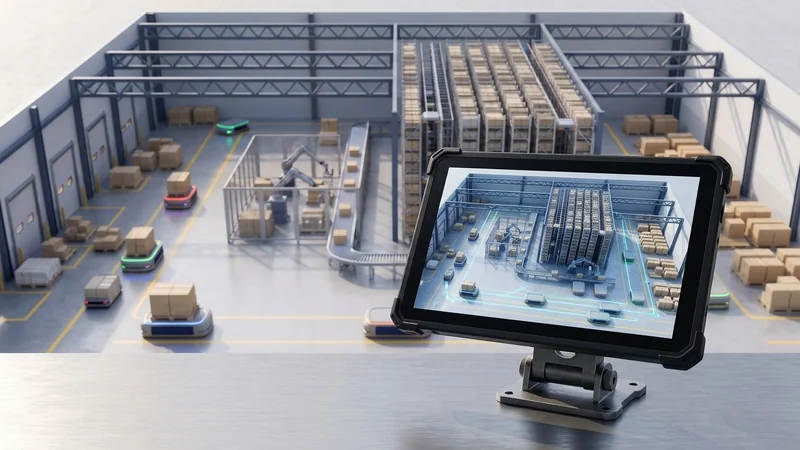
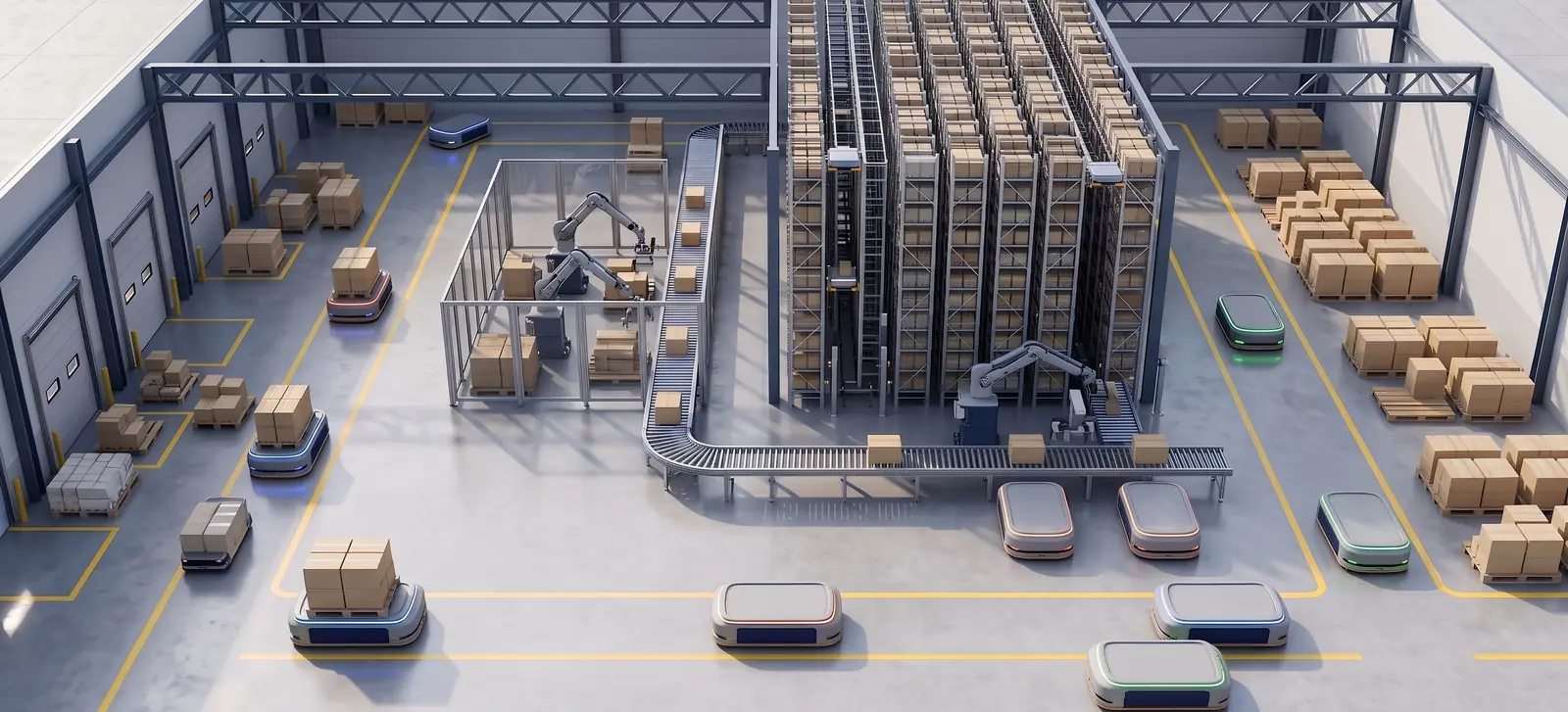
If you send us the current layout and navigation map of your factory or warehouse, we will prepare a free transport simulation and give you a guide to the results you can expect with a given number of AMRs. Please talk to us even if you do not have them at hand.
Can we contract for the software alone and supply our own robots?
Yes. You can use the software on its own, connecting AMRs you already own for fleet control and traffic management (please talk to us about supported models).
What does the on-site pilot involve?
We create a map of the line the robots will serve, set up robot routes, arrange the actual robots and train your on-site operators. We compile the operating data collected during the pilot and submit a report assessing the labor-saving effect. Please talk to us about conditions such as duration and cost.
Can robots run on a factory floor that is slightly uneven or has small steps?
We survey your site in advance, checking steps, ramp angles, oil on the floor and similar conditions, to judge whether robots can operate there and to select suitable models and attachments.
Can robots run automatically on instructions from our existing manufacturing execution system (MES)?
Once the integration method is confirmed, signals or API triggers from your MES can automatically generate retrieval orders and lineside delivery orders for the AMRs (please talk to us about integration details).
Can we operate AMRs from different manufacturers together on the same floor?
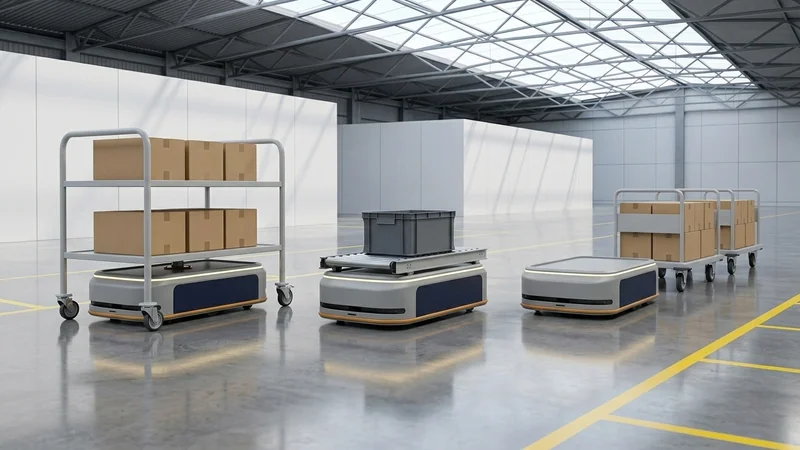
Yes. nantoka.AI supports multi-vendor configurations through standard communication interfaces such as VDA 5050 and manufacturer APIs, coordinating under-ride, towing, and lifter AMRs on a single shared map and screen (please talk to us about supported models).
How is safety managed when AMRs share aisles with human workers?
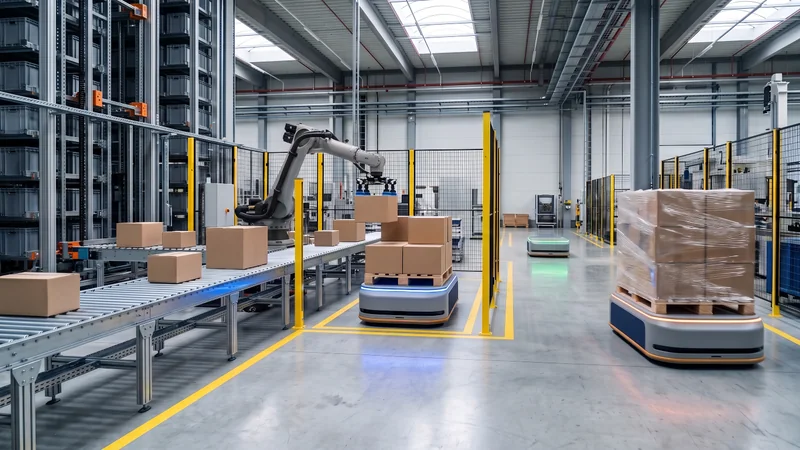
Alongside each robot's onboard safety sensors (such as LiDAR) for obstacle detection, deceleration, and stopping, the fleet management software controls intersection entry and passing zones to support safe operations aligned with international standards such as ISO 3691-4.
What is the deployment process, and how long does WMS or MES integration take?
Rollout proceeds in five steps: site consultation (Step 1), free transport simulation (Step 2), on-site pilot (Step 3), full deployment decision (Step 4), and production WMS, MES, or ERP integration (Step 5). Integration timeline and scope are estimated based on your existing system interfaces and transport volume.
What is the difference between fixed-route AGVs and AMRs?
In general, fixed-route AGVs follow magnetic tape or guides on the floor and stop when an obstacle blocks their path. By contrast, AMRs (autonomous mobile robots) use SLAM and sensors such as LiDAR to perceive their surroundings and detour autonomously, and combining them with nantoka.AI fleet management software coordinates passing and congestion across the whole floor.
Can we deploy AMRs without installing floor tape or having a CAD layout beforehand?
Yes. Because SLAM-based AMRs can be driven manually along your aisles to scan and build a site navigation map, large-scale floor work and magnetic tape installation are not required as a rule. Even without CAD drawings or a layout map at hand, we can discuss a preliminary transport simulation and on-site pilot (PoC) based on aisle widths, loads, and daily trip counts.
When an AMR stops in an aisle due to an error, do workers have to go onto the floor every time?
No, not every stoppage requires a floor visit. When a traffic stall or onboard AMR system error occurs, the management screen reports the robot's map location and error details so operators can assess the issue remotely. For software-recoverable events such as route deadlocks, minor localization drift, stalled tasks, or soft faults, operators can quickly execute remote actions such as rerouting, relocalization, order cancellation or reassignment, soft error clearing, or a software reset directly from the management screen (supported actions depend on the connected AMR's API and site safety design). By contrast, incidents that require physical safety verification or hands-on repair—such as a pressed hardware emergency stop (E-Stop), bumper safety-circuit latch, immovable physical obstacles or shifted loads blocking the aisle, hardware failures, or prolonged network loss—still require on-site inspection and manual intervention in line with safety standards such as ISO 3691-4. Even in those cases, knowing the exact robot, map position, and fault code upfront helps technicians prepare properly and shorten troubleshooting time.