SOLUTIONS
Solutions
From comprehensive warehouse and logistics automation to plant-wide automation, we propose an approach suited to your on-site challenges
OUR SERVICES
Our services
-
Concept to deployment
Warehouse and logistics automation proposed to fit your site conditions
-
Tailored to your budget
Budget-conscious configurations including automated warehouses from reliable manufacturers
-
One platform
No need to switch between separate software tools for each process
BUSINESS CHALLENGES
Even after you deploy robots,why isn't transport running smoothly?
-
Congestion or robot errors stall AMRs in aisles, forcing staff onto the floor
As the fleet grows, AMRs can stop head-on in narrow aisles and intersections (deadlock), or stall due to navigation errors or onboard system faults. Normally, workers have to walk to the floor to inspect, assess, and clear each stoppage, and recovery takes even longer when deeper troubleshooting is needed.
-
The best-suited robot is not chosen for each job
When a line requests parts, the system cannot dispatch the most suitable vehicle based on which ones are free and how much battery they have left, leading to wasted empty runs and waiting.
-
Transport robots are disconnected from the warehouse and existing systems
Warehouse retrieval and lineside delivery are out of sync, creating idle time as workers at the assembly line wait for materials to arrive.
-
Return on investment (ROI) is unclear, so it is hard to commit to deployment
Constraints of the building and its aisles make it hard to tell whether robots will really deliver results, and concerns about a huge upfront investment and the risk of failure keep the plan from moving forward.
CORE SOLUTION
Comprehensive warehouse and logistics automation consulting
Combining AMRs, automated warehouses and management software, we propose warehouse and logistics automation from initial concept through deployment.
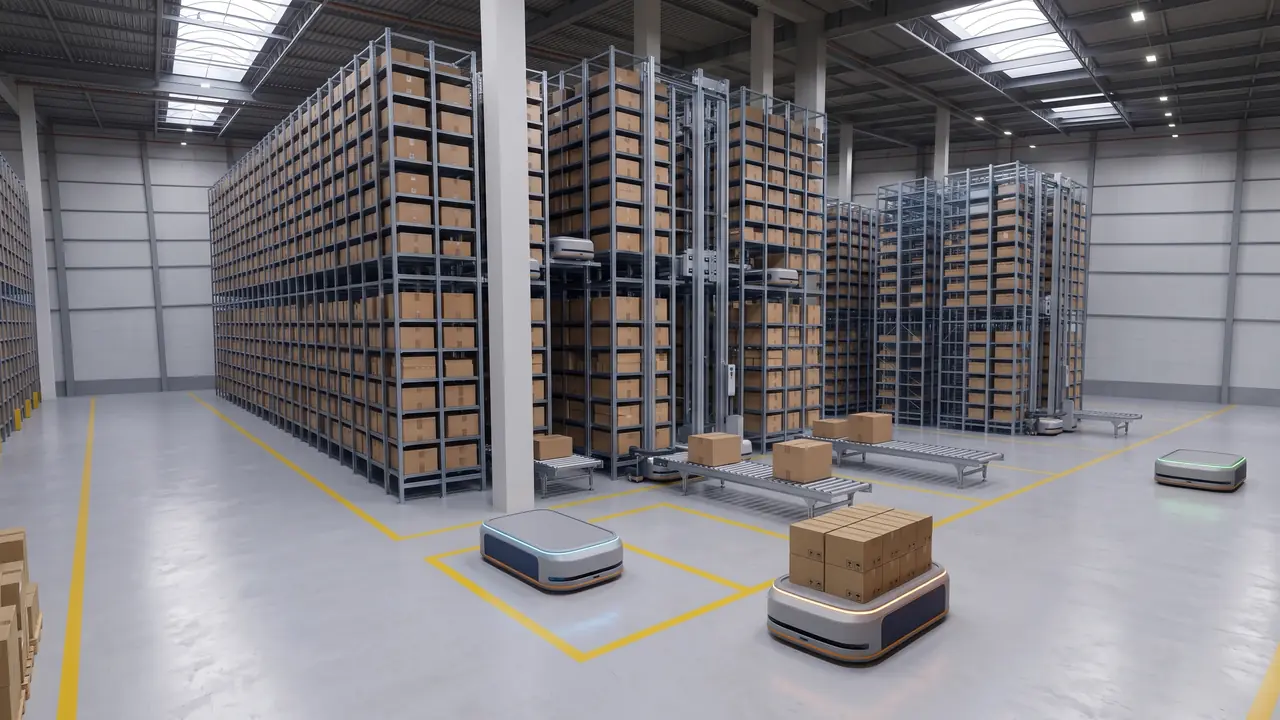
CORE SOLUTION
Core solution components
We combine three elements to propose automation with the entire warehouse and logistics flow in mind. Please talk to us about the configuration and scope for your site conditions.
-
AMRs (transport)
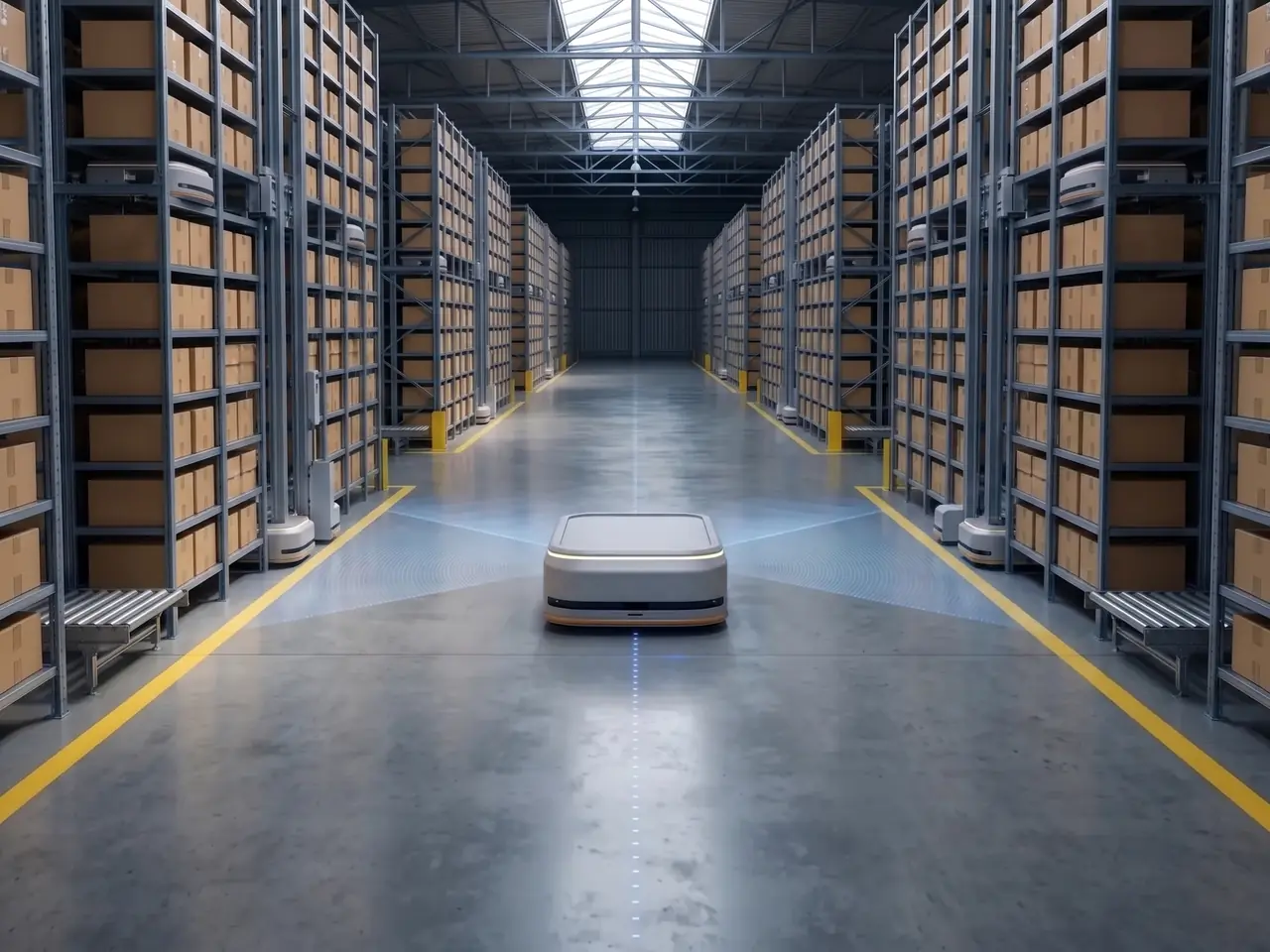
Based on your loads, operating environment and number of robots, we select suitable models from AMRs including third-party products.
-
Automated warehouse (storage)
For automated warehouses handling storage and picking, we select and propose a configuration from reliable manufacturers matched to your stored items, volume, installation environment and budget.
-
Management software (control and integration)
Centrally manages multiple AMRs and integrates with WMS, MES and ERP via API (please talk to us about integration methods).
AUTOMATED WAREHOUSE
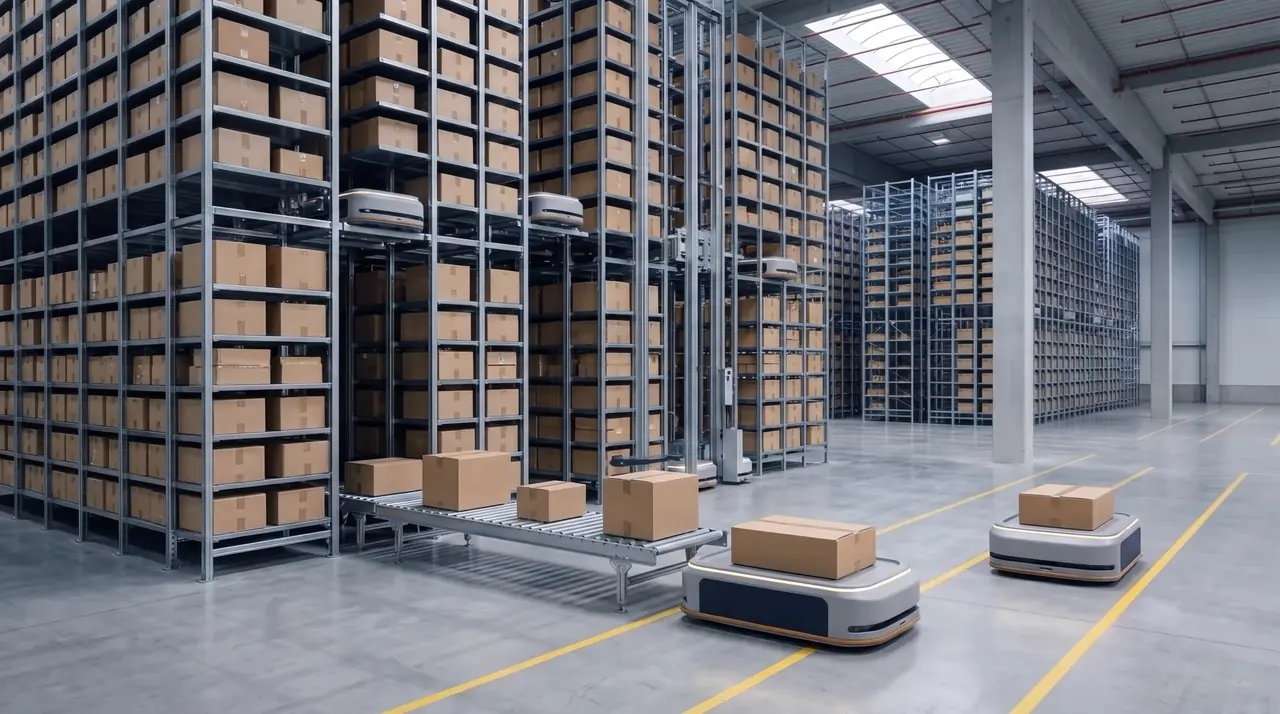
Main types of automated warehouses
There are several types of automated warehouses. Because the right type varies depending on the size and volume of stored goods, inbound and outbound frequency, available space and budget, we compare reliable manufacturers to propose a suitable option.
-
Unit-load type
Uses stacker cranes to store and retrieve pallet-sized loads in high-bay racks. Well suited for storing heavy or bulky loads.
-
Mini-load type
Handles loads in containers, trays or cases. Considered for sites that store large quantities of small, lightweight items.
-
Shuttle type
Uses shuttles running inside racks to store and retrieve loads. Considered for sites that need higher storage density within limited floor area.
-
Vertical type
Retrieves loads from vertically stacked trays. Considered for sites with limited installation space handling small to medium-sized items.
HOW WE SUPPORT
How we proceed within your budget
We work with you to consider a configuration that fits your budget and propose a practical deployment sequence.
-
Reviewing current operations and needs
We ask about stored items and volumes, inbound and outbound frequency, current operations, available installation space and your budget.
-
Comparing types and manufacturers
We compare multiple system types and automated warehouses from reliable manufacturers to narrow down candidates suited to your site conditions.
-
Configuration plan within budget
We propose a combination of automated warehouse, AMRs and management software, along with a deployment sequence that fits within your budget.
-
Step-by-step deployment
We propose a plan that starts with the required scope and can be expanded while confirming day-to-day operation.
FACTORY AUTOMATION
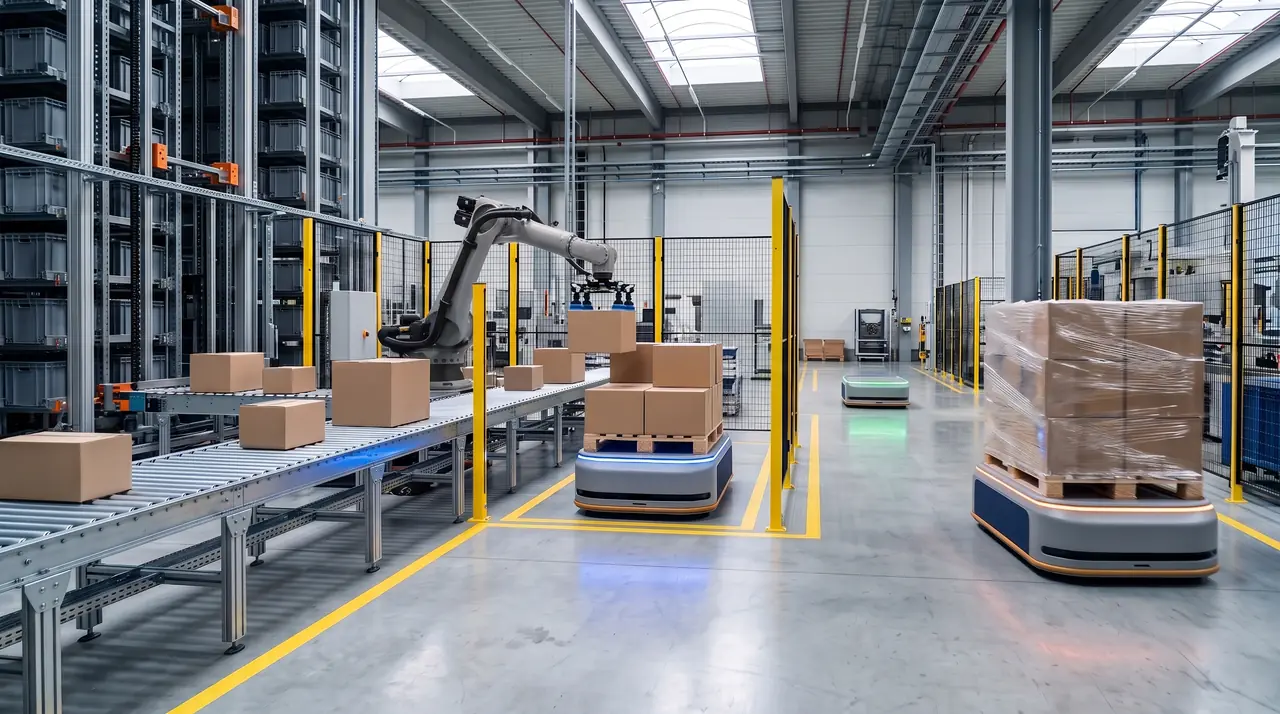
Total factory automation consulting
Starting from transport, we propose automation across the factory from organizing current issues to a step-by-step deployment plan.
FACTORY FLOW
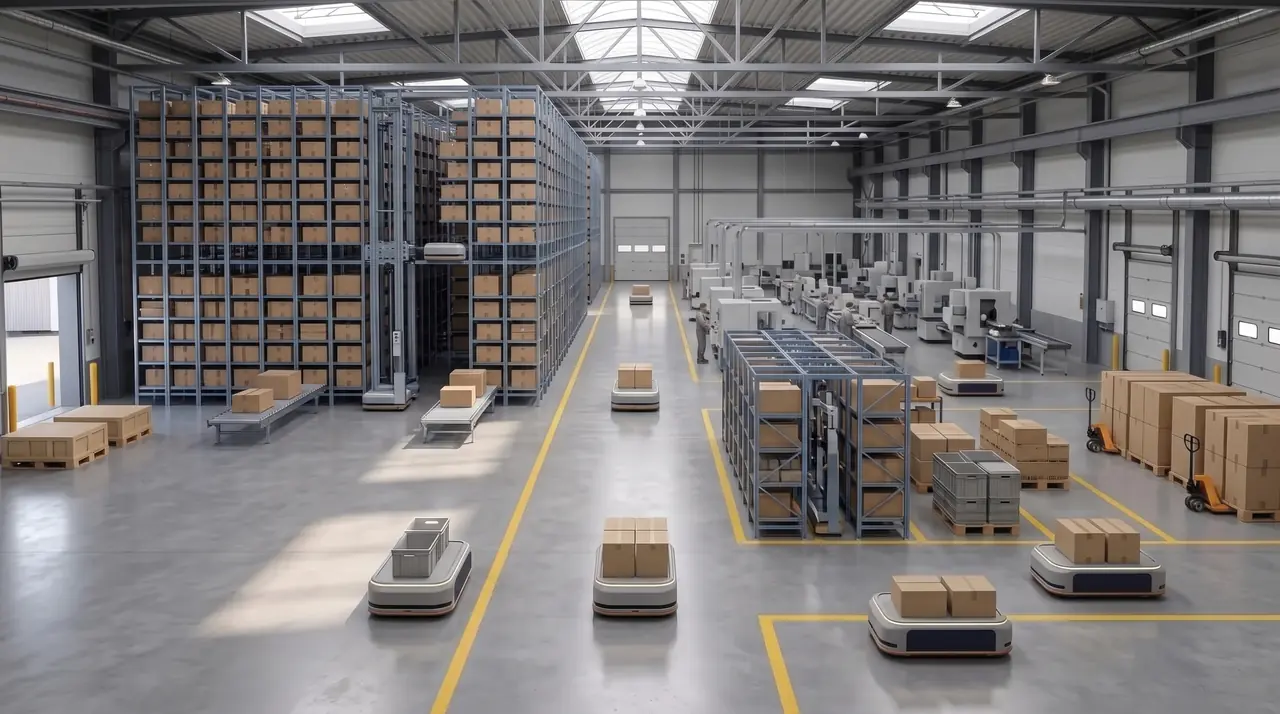
Planning automation along your factory flow
Factory operations connect through receiving, storage, processing, lineside delivery and shipping. Which process to automate first is discussed based on your site challenges and priorities.
-
Receiving
Receiving incoming parts and materials and transporting them to storage or the next process.
-
Storage
Storing parts and products and retrieving them when needed.
-
Processing
Delivering parts to machining and assembly lines and transporting them to the next process.
-
Lineside delivery
Delivering the right parts to the side of the line at the timing needed.
-
Shipping
Consolidating finished goods and transporting them to the shipping area.
HOW WE SUPPORT
How we build the proposal
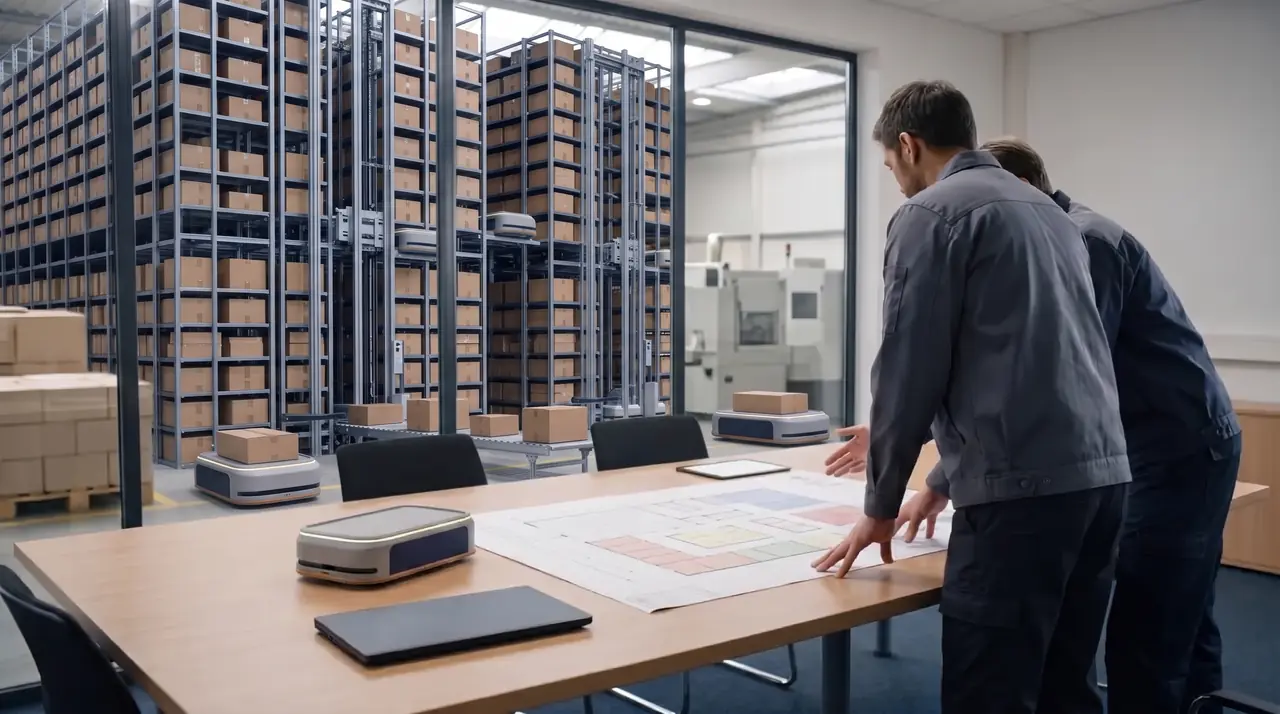
We propose starting with transport automation using a single robot and expanding the target processes as results are confirmed. Please talk to us about details tailored to your site conditions.
-
Organizing on-site challenges
We organize issues across receiving, storage, processing, lineside delivery and shipping, and work with you to set automation priorities.
-
Step-by-step deployment plan
We propose starting with 1–2 AMRs, confirming results in an on-site pilot, and then expanding across the same line or other floors.
-
Reviewing existing system integration
We review ways to integrate with existing business systems such as WMS, MES and ERP (please talk to us about integration methods).
-
Selecting automation equipment
You can talk to us about selecting and combining automation equipment, including for processes beyond transport.
FLOW
Deployment process
-
1
STEP 1Site consultation (please share your layout and navigation map if you have them)
We ask about the aisle widths of your factory or warehouse, the loads to be moved (dimensions and weight) and the number of transport trips per day. If you have a layout and navigation map, please share them as well. If you do not have them at hand, we can discuss a rough estimate based on a conversation about your aisle widths and loads. During the on-site pilot, we drive an AMR manually to map your site.
-
2
STEP 2Transport simulation (free)
On a PC, we run a simulation to estimate the number of robots required, transport capacity and charging cycles, and present the expected labor savings as a guide.
-
3
STEP 3On-site pilot (duration and conditions to be discussed)
We bring actual robots to your site and verify how they run and handle lineside delivery. We also check how easy they are to operate.
-
4
STEP 4Full deployment decision
The decision on full deployment is made based on the pilot report. The contract type (purchase, rental, etc.) and how pilot costs are handled are agreed with you after discussing the conditions.
-
5
STEP 5Full system integration and stable operation
We integrate with your business systems and equipment for production use, then start autonomous operation. After go-live, we continue software updates and maintenance.